

JOURNAL
Self-Growth Sparks Collective Empowerment

It’s magical how learning from my own life experiences aligns me with clients who are ready to learn. The chemistry and flow during our healing sessions is so apparent and transformative. I thrive on authenticity and trusting the process.
Embracing Autonomy: Breaking Free from the Need for External Approval

Sometimes, individuals feel compelled to seek agreement from others even when they know deep down that it’s not necessary or even healthy for them. This could stem from a fear of conflict, a desire for validation, or a lack of confidence in their own beliefs and decisions.
However, constantly seeking approval from others can lead to a loss of autonomy and a sense of disconnection from one’s true desires and values. In these situations, it’s important for individuals to cultivate self-awareness and assertiveness, recognizing that their worth and identity are not dependent on the approval of others.
Learning to trust their instincts and stand firm in their convictions can empower them to pursue their own paths authentically, regardless of whether others agree or not.
Healing from Relationship Fixation: A Journey to Self-Acceptance

Are you a woman who finds herself repeatedly drawn to relationships where you feel compelled to fix or change your partner? Do you often find yourself in a cycle of trying to mold them into someone they’re not, only to feel frustrated and unfulfilled? If so, you’re not alone. Many women experience this pattern, driven by underlying psychological factors and past traumas.
The root of this behavior often lies in early experiences and beliefs formed during childhood or previous relationships. Women who engage in this pattern may have experienced trauma or neglect in their formative years, leading to a subconscious belief that their worth is tied to their ability to fix or rescue others. Additionally, societal pressures and gender norms can contribute to the belief that women are responsible for nurturing and improving their partners. Fixation in the context of relationships refers to a strong and often unhealthy attachment or preoccupation with trying to change or control a partner, often to the detriment of one’s own well-being and the health of the relationship.
Furthermore, these women may have developed a fear of abandonment or rejection, leading them to seek validation and security through fixing their partner’s flaws. This can create a cycle of seeking out relationships with men who are emotionally unavailable or unwilling to meet their needs, perpetuating feelings of inadequacy and unworthiness.
So, what can be done to break free from this cycle and embark on a journey of emotional healing and self-discovery? The first step is to recognize and acknowledge the underlying beliefs and traumas driving this behavior. Therapy, journaling, and self-reflection can be powerful tools in uncovering these deep-seated issues and gaining insight into why you feel compelled to fix others.
Once these patterns are identified, it’s essential to work on building self-esteem and self-worth independent of external validation. Learning to love and accept yourself as you are, flaws and all, is key to breaking free from the need to fix others. This may involve practicing self-care, setting boundaries, and prioritizing your own needs and desires.
In the context of relationships, it’s important to shift the focus from fixing your partner to fostering mutual growth and support. Healthy relationships are built on acceptance, respect, and open communication. Instead of trying to change your partner, focus on accepting them for who they are and encouraging them to grow and evolve in their own time and way.
Moreover, it’s crucial to assess whether a relationship is truly fulfilling and healthy for both parties. If you find yourself constantly trying to change your partner or feeling like you’re sacrificing your own needs for the sake of the relationship, it may be time to reevaluate and consider whether the relationship is truly serving you.
Remember, it’s okay to outgrow relationships that no longer align with your values and needs. True healing and growth come from within, and by prioritizing your own well-being and self-love, you can break free from the cycle of relationship fixation and cultivate healthier, more fulfilling connections. So, embrace your journey of self-discovery and empowerment, and step into the fulfilling, authentic relationships you deserve.
Anxiety Alleviation: Finding Peace Beyond Distractions
There have been occasions in my life when things were too much to bear, and I found myself turning to games like ___ for solace and distraction. In moments of overwhelming stress or anxiety, these simple, yet captivating games provided a welcome escape, allowing me to temporarily divert my attention from the weight of my problems. Fortunately, I possessed the ability to use them in moderation, indulging for a period of time before eventually moving on and letting them fade into the background of my life for years at a time—until the next big crisis struck.
Addictive games like ___ might appear innocuous at first glance, with their colourful graphics and simple mechanics. However, beneath their surface lies a potent mechanism that taps into our innate desire for achievement and reward. These games create a constant state of tension and anticipation as players strive to solve puzzles and progress to higher levels. The rush of dopamine that accompanies each successful match or level completion reinforces the addictive cycle, keeping players hooked and craving more.
While these games may serve as a temporary distraction from daily stressors, they also contribute to a deeper issue: the perpetuation of anxiety. The relentless pursuit of success in these games mirrors the constant pressure to perform and excel in real-life situations. This constant state of heightened arousal, akin to the fight-or-flight response, can lead to increased levels of anxiety and stress over time.
In essence, addictive games like ___ provide a temporary escape from reality but ultimately reinforce patterns of anxiety and tension. By perpetuating a cycle of achievement and reward, they keep players trapped in a state of perpetual striving, ultimately contributing to the very anxiety they seek to alleviate.
If you’re seeking support and guidance on your journey to overcome anxiety and find inner peace, know that you’re not alone. We’ll work together to navigate the challenges of anxiety and discover effective strategies for healing. Whether you’re struggling with the addictive pull of games like ___ or facing other sources of stress and tension in your life, know that there is hope for a brighter tomorrow. Take the first step towards healing today by reaching out and booking a Consultation to discuss options available to you. You deserve to live a life filled with peace, joy, and fulfillment, and I’m here to help you make that a reality.
Choose You: Prioritizing Authenticity and Happiness
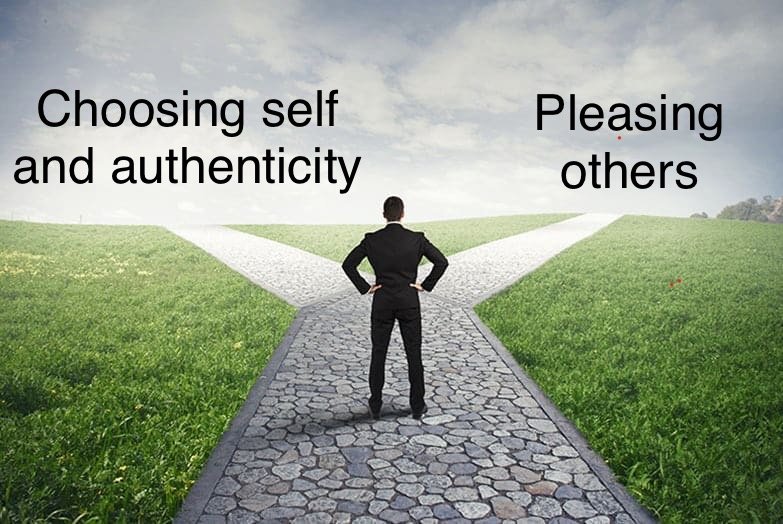
In my own journey towards healing and self-discovery, I’ve grappled with the difficult decision of prioritizing my own well-being, over staying in a relationship to spare the other person’s feelings and to please them. This confusing experience required me to choose myself and my own happiness, even if it meant causing temporary pain to myself and someone I cared about deeply.
Reflecting on similar journeys experienced by my clients, I realize that this struggle is not unique to me. Recently, I had the privilege of working with a teenage client who faced a similar dilemma. They were torn between staying with their partner out of fear of hurting them, versus embracing their own best interests.
Through our sessions, clients in this situation, find the courage to prioritize their own happiness, understanding that true fulfillment comes from honouring their authentic self. Their journey serves as a powerful reminder that it’s okay to choose ourselves, even when it means letting go of relationships that no longer serve us. By doing so, we create space for growth, joy, and authentic connections. The reality is that it sets both partners free.
The Burden of Carrying Others’ Weight
In life, it’s natural to care for those around us, to lend a helping hand, and to offer support in times of need. However, there comes a point when our empathy and compassion can become burdensome, leading us to carry the weight of others’ problems on our shoulders. While it’s noble to be there for others, it’s crucial to recognize when we’re allowing their issues to consume our own mental and emotional space.
Taking on other people’s burdens can feel like carrying an extra load, rent-free, in our heads and hearts. It’s as if we’ve given them a key to our inner sanctum, allowing their troubles to take up residence without considering the toll it may take on our well-being. But it’s essential to remember that not everything that weighs on us belongs to us.
So, how can we strike a balance between being supportive and safeguarding our own mental and emotional health? Here are a few tips:
• Set Boundaries: It’s okay to offer support and empathy, but it’s equally important to establish boundaries. Recognize when you’re taking on too much and learn to say no when necessary.
• Practice Self-awareness: Take time to reflect on your own feelings and emotions. Are you feeling overwhelmed or drained? If so, it might be a sign that you’re carrying too much of someone else’s burden.
• Focus on What You Can Control: While we can offer support, ultimately, we can’t solve everyone’s problems. Focus on what you can do to help, but also accept that some things are beyond your control.
• Seek Support: Lean on your own support network when needed. Talking to friends, family, or a therapist can help you process your own emotions and gain perspective.
• Practice Self-care: Make self-care a priority. Engage in activities that bring you joy and replenish your energy reserves. Taking care of yourself is essential for being able to support others effectively.
Remember, it’s admirable to be there for others, but not at the expense of your own well-being. Be conscious of what belongs to you and what belongs to someone else, and put yourself first.

💔👉❤️
My goodness, I can relate and understand how easy it is to remain a victim. Some parts of life are so very difficult, and you get so entangled with other people that it seems absolutely impossible to change things to make life better for yourself. Sacrificing yourself for others can be part of it, but there is also how you are benefiting from remaining in the problem. Is what you are getting out of remaining a victim worth the suffering? Some day you will say no. The last straw might be the physical deterioration of your body, or it might be the mental hardship, but some day, you will choose YOU. It was never about the other person. It was about YOUR self-worth and YOUR life. And you will see that you never really were the victim at all. It just seemed like that. I'm not saying it will be easy. It will involve you taking a step beyond fear. It will take getting out of your comfort zone. It will take courage and finally getting to the point where you NEED to do this for you. In the end, I CAN tell you it will be worth it. Choosing YOU always is.
Do You Feel Worn Out?
I don’t like to wear things out. I like to keep things good. But life just wears things out. Including myself. There’s so much maintenance about living. So much work to stay hydrated and fed and warm and clean. Never mind trying to get along with everyone. Being patient with yourself while recovering and healing from hard things is sometimes the only thing you can do. When you feel better, meeting basic needs doesn’t seem so insurmountable. Until then, be easy on yourself. Meet yourself where you are, not from where you wish you were. If surviving is all you can do, that is enough. 💔👉❤️
Looking in the Mirror
Earlier today, I was thinking about how we see ourselves when we look in the mirror. I suspect it is quite likely that this eagle sees its reflection as a possible enemy. But in our eyes, an eagle is a majestic, empowered being, symbolic of freedom.
When we look in the mirror, do we see and criticize our reflection? Do we treat ourselves like adversaries rather than allies? Do we focus on the flaws, aging, and the mistakes we’ve made? What words are we thinking about ourselves?
How much better would it be to have compassion and love toward who we see in the mirror. To focus on our strengths. To forgive our past. To love ourselves, as we are now. To find the spark in our eyes, and the depth of our souls. To symbolically reach out and gently take our own hand as we step into the future.
Sometimes surviving is all about taking the next best step. We have it in us to keep going.

Need to Recover From A Covert Narcissist?
Covert narcissism, a subtler manifestation of narcissistic personality traits, often eludes immediate recognition. In this post, we'll explore the description of covert narcissists, the impact they can have on individuals, the challenges of leaving such a relationship, and crucial steps for recovery.
I. Description of a Covert Narcissist:
Grandiosity: Covert narcissists may possess an internal sense of superiority and entitlement, though not always obvious to others.
Attention-Seeking: They may crave admiration and validation, but do so more subtly, seeking attention through self-pity or playing the victim.
Lack of Empathy: Covert narcissists often struggle with empathy, finding it difficult to understand or connect with others' emotions.
Manipulative Behavior: They may engage in subtle manipulation, using passive-aggressive tactics or emotional manipulation to control situations or people.
Fragile Self-Esteem: Despite their outward appearance, covert narcissists often harbor deep insecurities and have a fragile self-esteem.
Victim Mentality: They might adopt a victim mentality, portraying themselves as suffering unjustly to gain sympathy and support.
Difficulty Handling Criticism: Covert narcissists may react strongly to criticism, taking it personally and responding with defensiveness or withdrawal.
Envy of Others: They may harbor envy of others and be resentful of perceived successes, feeling a sense of entitlement to what others have.
Superficial Charm: While they may not display overt arrogance, covert narcissists can be charming on the surface, hiding their true motives.
Difficulty in Maintaining Relationships: Building and maintaining genuine relationships can be challenging for covert narcissists due to their self-centered tendencies.
II. The Covert Narcissist’s Impact on Your Personal Experiences:
- Exploitative Behavior: Covert narcissists often attract individuals who are empathetic, nurturing, and supportive. The unsuspecting partner may be drawn to the narcissist's initial charm, intelligence, or seemingly vulnerable demeanor.
- Desire to Fix: People attracted to covert narcissists often possess a strong desire to help or fix others, and they may initially find the covert narcissist’s apparent humility appealing.
- Emotional Exhaustion: The empathetic partner may find themselves in a draining dynamic, constantly trying to meet the covert narcissist's unspoken expectations.
- Psychological Turmoil: Covert narcissists employ manipulative tactics that induce self-doubt, fostering confusion, and a persistent questioning of one’s perceptions, choices, and self-worth within the relationship.
- Imbalance in Relationships: Power imbalances and emotional manipulation can lead to a sense of inadequacy and an inability to fulfill the narcissist's ever-shifting needs.
- Isolation: Covert narcissists may strategically isolate their victims, creating dependency and making it challenging for the partner to seek external support.
- Loss of Self-Identity: Individuals involved with covert narcissists may experience a gradual erosion of their own identity as they prioritize the needs and demands of the narcissist.
III. Leaving a Covert Narcissist:
- Psychological Hold: Breaking free from a covert narcissist can be complicated due to the psychological hold they establish over their victims.
- Fear and Guilt: Victims may grapple with fear of retaliation and guilt for leaving, emotions manipulated and exacerbated by the narcissist.
- Gaslighting: A psychological manipulation tactic where an individual deliberately instills doubt or confusion in a target, causing them to question their memory, perception, or sanity. This insidious method is frequently used to exert control, erode confidence, and foster dependency in the victim. The presence of gaslighting complicates the decision to leave, as it injects doubt into the victim's perceptions and choices.
- Love Bombing: Covert narcissists frequently employ love bombing, inundating their partner with not only excessive affection and attention, but also through the act of crafting lengthy messages and letters. This inundation makes it challenging for the victim to discern the true nature of the relationship, as the narcissist strategically overwhelms them with declarations of love and admiration.
- Post-Breakup Defamation: Following a breakup, covert narcissists may resort to bad-mouthing their former partner, engaging in attempts to tarnish their reputation and manipulate the narrative to maintain control.
- Pity for the Narcissist: Victims might feel sorry for the narcissist, especially if the narcissist adopts a victim mentality post-breakup. This sympathy can hinder the victim’s ability to detach emotionally.
- Suicidal Threats: Covert narcissists may resort to making threats of self-harm or suicide as a manipulative tactic to prevent their partner from leaving, adding an additional layer of emotional turmoil to the breakup.
IV. Steps for Recovery:
Self-Awareness: Individuals need to reflect on patterns that led them to a relationship with a covert narcissist, understanding personal vulnerabilities.
Setting Boundaries: In the recovery process, it's crucial to establish clear boundaries and learn to assertively communicate needs and expectations. A significant aspect of this journey involves recognizing the importance of saying “no” and prioritizing oneself over the needs of the narcissist.
Building Self-Esteem: Victims must work on rebuilding a healthy self-esteem that may have been eroded during the relationship.
Educate Yourself: Learning about narcissistic traits helps in identifying warning signs and avoiding similar relationships in the future.
Seeking Support: Connecting with friends, family, or professionals is crucial for emotional support during the recovery process. Sharing your experiences and feelings with a supportive network can provide validation and comfort, helping you navigate the complexities of healing from a relationship with a covert narcissist.
Safety Concerns and Involving Law Enforcement: In instances involving threats, stalking, or safety concerns, it's imperative to consider the involvement of law enforcement. Seeking legal support can provide an additional layer of protection and ensure your safety during the recovery process. Your well-being is a priority, and involving the appropriate authorities can help address any potential dangers effectively.
Therapy or Counseling for Recovery: Engaging in therapy, including specialized approaches like NeuroCognitive Reprogramming and Time Line Therapy with an experienced practitioner, allows individuals to delve into past experiences, understand patterns, and develop effective strategies for making healthier relationship choices. These tailored therapeutic methods can provide a comprehensive framework for healing and personal growth, aiding in the recovery journey from a relationship with a covert narcissist.
Recovering from a relationship with a covert narcissist is a complex journey that involves self-reflection, setting boundaries, and seeking support. Understanding the dynamics of covert narcissism is crucial for navigating relationships consciously and building a resilient sense of self.
