
Nervous System Dysregulation
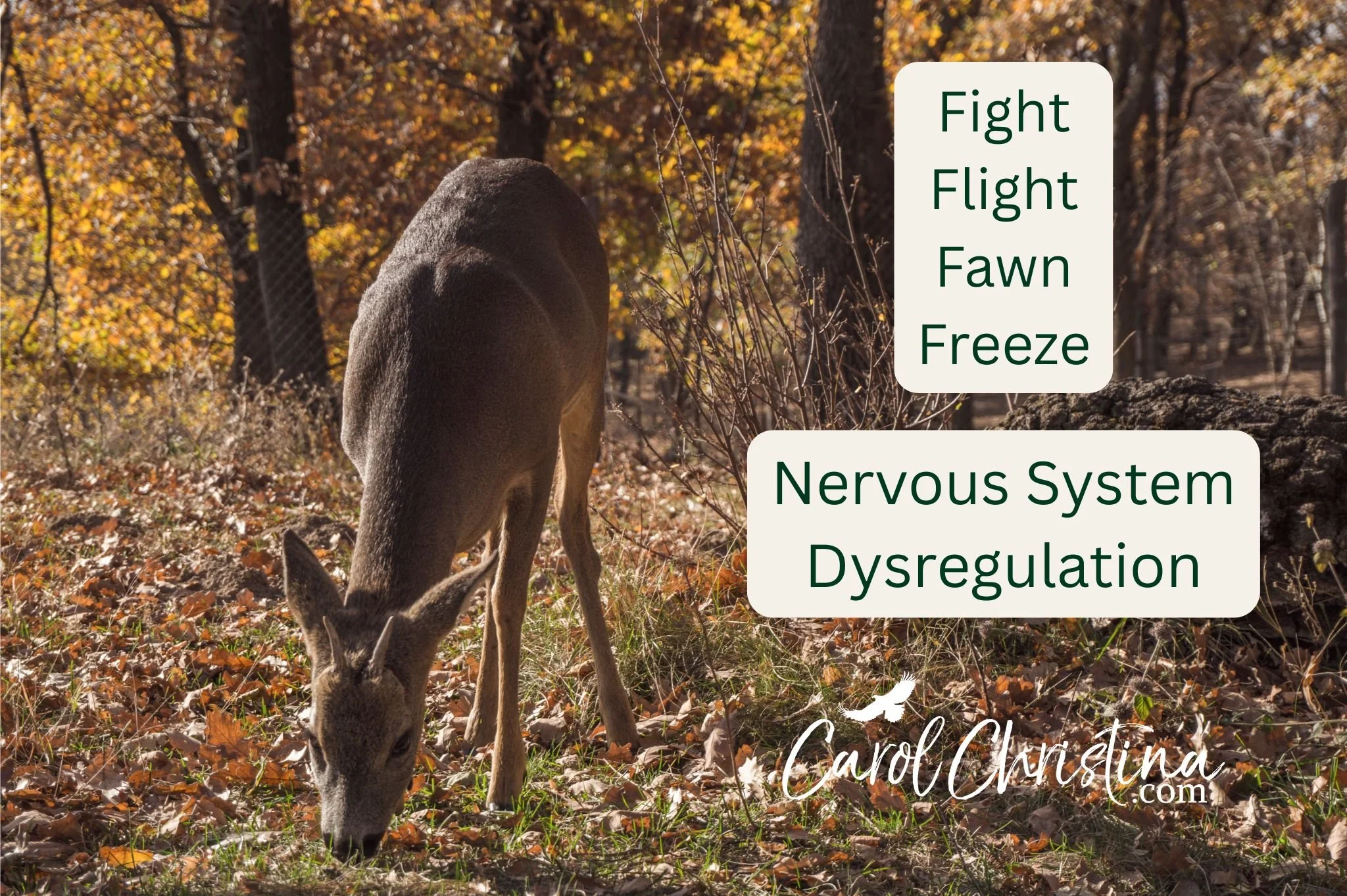
Years ago, my older relatives would look at someone who was often worried, tense, or upset and say, “Her nerves are bad.” Today, we might say your nervous system is stuck in survival mode. You may feel worried even when nothing is wrong. You may be on edge, get irritated quickly, overthink everything, or have trouble relaxing. You may even feel unsafe when you are actually safe.
You might:
Snap or get irritated very quickly.
Worry about things over and over.
Feel like you are always on edge.
Have racing thoughts.
Stay busy because slowing down feels uncomfortable.
Shut down when things become too much.
Feel numb, stuck, or disconnected.
Put things off even when you really want to get them done.
Say yes when you really want to say no.
Avoid conflict at almost any cost.
Have trouble concentrating or making decisions.
You may even wonder, “Why am I reacting like this? I know I’m safe. So why can’t I just calm down?”
One reason may be that your nervous system has learned to stay ready for danger.
Imagine that you are walking through the woods and suddenly see a tiger. You don't stop to think, “What would be the best way to handle this situation?” Your body reacts. You may fight the tiger. You may run away. You may freeze and become completely still. Or you may try to keep the tiger calm, so it won't hurt you. These are similar to the four survival responses we often talk about as Fight, Flight, Freeze, and Fawn. Your nervous system can use these responses when it senses danger. They are automatic protective reactions designed to help you survive. The problem can happen when your nervous system starts using these same reactions in everyday situations, even when there is no real danger.
Fight: “I need to protect myself.”
The fight response prepares you to face a threat.
You may become angry, irritated, argumentative, controlling, or defensive.
You may feel the need to prove your point, win the argument, take control, or push back.
Sometimes the fight response can look like snapping at someone over something small.
You may think, “Why did I get so angry about that?”
Your body may have reacted as though it needed to protect you.
Flight: “I need to get away.”
The flight response prepares you to escape from danger.
You may feel anxious, restless, or unable to sit still.
You might keep yourself busy all the time because slowing down feels uncomfortable.
You may overthink, worry, avoid certain people or situations, or constantly look for something that could go wrong.
Sometimes you are physically trying to get away.
Other times, your mind is trying to escape by staying busy, worrying, planning, or thinking about everything that could happen.
Freeze: “I don't know what to do.”
The freeze response can happen when your nervous system feels overwhelmed.
Instead of fighting or running, you may shut down.
You might feel numb, disconnected, foggy, or stuck.
You may know exactly what you need to do, but you can't seem to make yourself do it.
You might procrastinate, stare at your phone, stay in bed, or avoid making a decision because everything feels like too much.
You may even wonder, “Why can't I just get myself moving?”
Your body may be trying to protect you by slowing everything down.
Fawn: “I need to keep everyone happy.”
The fawn response is about trying to stay safe by keeping other people happy.
You may become very focused on what everyone else needs, wants, or feels.
You might say “yes” when you really want to say “no”.
You may apologize even when you did nothing wrong, avoid conflict, give too much, or change what you say and do so someone else won't become upset.
You may become so focused on keeping the peace that you lose track of what you actually want or need.
You might think, “As long as everyone else is okay, everything will be okay.”
These responses are not boxes that you have to fit into. You might use different responses in different situations. You can have more than one response. You might fight with one person, run away from another situation, freeze when you feel overwhelmed, and fawn when you are afraid someone will be angry with you. You may even move between several responses during the same situation. The important thing to understand is that these reactions can happen automatically. Your nervous system is trying to protect you.
These responses can be very helpful when you are truly in danger. The problem comes when your nervous system keeps reacting as though danger is present, even when you are actually safe. Then a small disagreement can feel like a major threat. A simple decision can feel overwhelming. Someone's change in mood can make you anxious. You may react before you have time to think. This can leave you wondering: “Why did I do that?” “Why can't I just calm down?” “Why do I keep reacting this way?” Your nervous system has learned certain ways of trying to protect you.
When you begin to understand these patterns, your reactions can start to make more sense. And when you can recognize “This is my nervous system going into survival mode,” you have a better chance of pausing, understanding what is happening, and choosing how you want to respond.
Sometimes understanding yourself is the first step toward changing the pattern.