
Narcissistic Abuse 03 HOW
How You Can Become Caught in the Cycle of Narcissistic Abuse
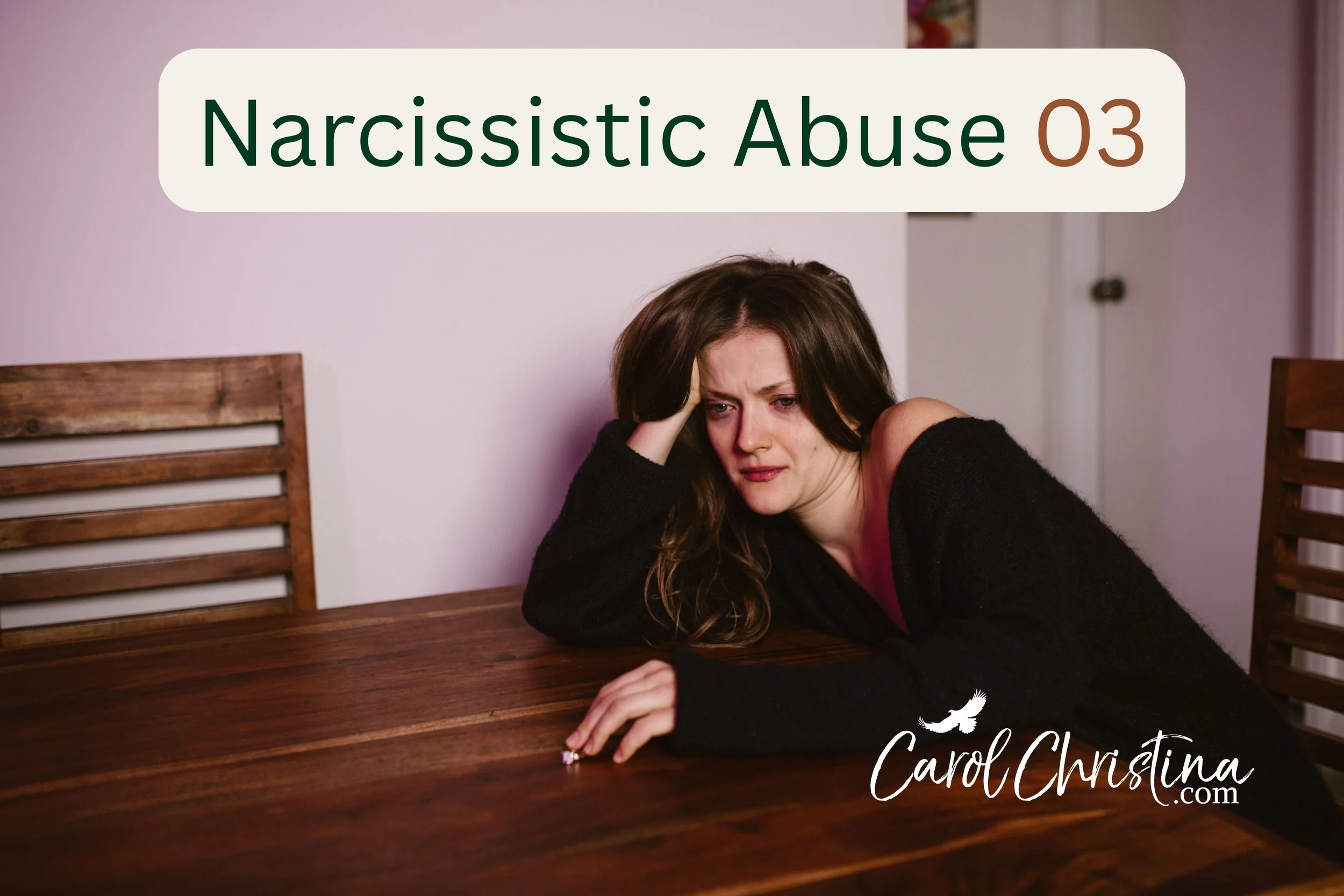
You may understand some of the things happening in your relationship now, but you may still wonder how you became so deeply caught in it.
In the beginning, you may receive a great deal of attention, affection, and praise. You may receive long messages, constant calls, big promises, and beautiful words about your future together. You feel chosen and important. You may believe you have finally found the kind of love you have always wanted. Your soul mate.
The strong connection can happen before you have had a chance to see the difficult side of the relationship. By the time the behavior changes, you are already emotionally attached. Then the criticism, control, or manipulation may begin.
You may try to fix things because you remember how good the relationship felt at the beginning. You may become more patient. You may explain yourself more carefully. You may keep trying to help the other person. You may keep trying to make the relationship work.
Sometimes the affection returns. You feel relieved. You think things are getting better. You may believe that your patience has finally paid off. Then the hurt starts again.
This cycle can be difficult to leave because you are constantly waiting for the good part to come back. When it does, even for a short time, you may feel a powerful sense of relief. That relief can give you hope and make you want to try again.
You may also believe that if you just find the right words, give enough love, become more patient, or understand them better, things will finally change. Your own personality can also become part of the cycle. If you are naturally caring, loyal, forgiving, compassionate, or good at seeing other people's point of view, you may give more chances than someone else would. You may think, Everyone makes mistakes. You may know about the other person's painful past, and think, They have been hurt. Maybe they just need someone to love them. You may also be used to taking care of other people. Saying “no” may feel uncomfortable. Putting your own needs first may feel selfish. Keeping everyone happy may feel like your responsibility.
Over time, you may stop seeing your own worth. You may become so focused on what the other person needs, feels, wants, or expects that your own needs begin to seem less important. You may put their happiness ahead of your own. You may measure your choices by how they will react rather than by what is healthy for you.
None of these qualities are bad. Caring about people is a good thing. Being loyal is a good thing. Having compassion is a good thing. The problem begins when those qualities are used against you, or when you feel you have to give up yourself to keep someone else happy.
Guilt can become part of the cycle too. If the other person tells you that you are abandoning them, hurting them, or ruining their life by leaving them, you may feel responsible for what happens to them. You may even become afraid of what they will do if you leave. You may worry that they will fall apart, hurt themselves, destroy your reputation, take the children, become angry, or make your life extremely difficult. Fear can keep you focused on what might happen to them instead of what is happening to you.
You can care about someone, and still recognize that the relationship is unhealthy. You can understand someone's pain without taking responsibility for their behavior.
You may also have an idea that leaving is only justified when something dramatic happens. Perhaps you believe you should only leave if there is physical abuse or if your partner has cheated. Emotional abuse, manipulation, control, constant criticism, intimidation, and the gradual loss of yourself may seem like reasons you should simply try harder. You may think, It's bad, but it's not bad enough to leave. That belief can keep someone in a painful relationship for a very long time.
Religious or deeply held personal beliefs can also make leaving complicated. You may believe that marriage is a lifelong commitment. You may believe you are supposed to forgive repeatedly, keep your promises, help your partner change, or keep trying no matter how difficult things become. Your beliefs may be deeply important to you. At the same time, you may need to consider whether those beliefs are being used to keep you in a situation that is causing serious harm.
Old beliefs can also make it harder to leave. Perhaps you learned that good people always forgive. Maybe you believe you should keep trying no matter how difficult things become. Maybe you learned that love means putting someone else's needs before your own. These beliefs can quietly guide your choices.
You may spend years trying to help the other person become happier, healthier, calmer, or more loving. You may believe that if you can just find the right approach, they will finally understand what they are doing and change. But you cannot do another person's emotional work for them.
You may also be working desperately to change the relationship while the other person has little reason to change because the current pattern is working for them. They may continue receiving your attention, forgiveness, loyalty, care, and efforts while you continue hoping that your next attempt will finally make things better. Recognizing this can be shocking and painful.
This is why simply learning to spot narcissistic behavior may not be enough. You can become very good at recognizing red flags, and still struggle to walk away when the relationship touches an old emotional pattern inside you.
You may need to learn that saying “no” does not make you selfish. You may need to learn that someone else's anger does not automatically mean you did something wrong. You may need to become comfortable with disappointing people. You may need to learn that you can care for someone without rescuing them. You may also need to recognize how putting someone else's needs ahead of your own has caused you to lose touch with your own needs and your own worth. You may also need to rebuild your trust in yourself. If someone has spent years telling you that your feelings are wrong, your memory is wrong, and your judgment is wrong, making your own decisions can feel scary.
You may be afraid to make the wrong choice. You may be afraid of regretting your decision. You may be afraid of what the other person will do. You may even wonder whether you can trust yourself enough to know what is right for you.
Start small. Notice what you like. Notice what you don't like. Notice when something feels wrong to you. Notice what happens when you say “yes” when you really mean “no”. Give yourself permission to have an opinion without needing someone else to agree.
And if you are still in the relationship, your safety matters. If there are threats, stalking, threats of self-harm, physical violence, or anything that makes you afraid, reach out for appropriate support rather than trying to manage the situation by yourself.
Understanding how you became caught in the cycle can help you stop blaming yourself for being there. It can help you understand why you kept trying, why you kept hoping, and why leaving may have felt so difficult. It can also show you what needs to change so that you can begin making different choices.
And that leads to another question: WHAT IF you could begin finding yourself again? Click here. →
Read more about Narcissistic Abuse: 01 WHY • 02 WHAT • 03 HOW • 04 WHAT IF • 05 Narcissistic Abuse QUESTIONS